2 Peter 1:4 ‘he has given us his very great and precious promises, so that through them you may participate in the divine nature’
The apostle Peter tells us to participate in the divine nature. When I think of participating in something divine I think of a lady in our home group called Linda who is an amazing cook. Whenever we meet she arrives with a bowl covered in tin foil. When the bible study is over we remove the cover and taste the contents. Often we go “Wow this is fantastic! This is divine!” As we dip our hands into the bowl we all participate in this ‘divine’ food.
God is literally divine, but not many people know that he is also tasty? Yes Psalm 34:8 says ‘Taste and see that the Lord is good.’ What does this mean? Well, look at the Son of God, he was tasty. The Roman soldiers who failed to arrest him said ‘No one ever spoke like this man.’ They found him interesting; tasty. Mary sat captivated at Jesus’ feet. She found him interesting; tasty. Crowds followed Jesus everywhere because he was tasty. Why was he tasty; because had the divine nature.
You and I can participate in the divine nature. And when the divine nature is part of us, we are tasty. People go “How come you’re always good to people?” “How come you’re always strong?” “How come you’re always enthusiastic?” And you can say, “Well, I participate in the divine nature.”
Peter tells us how to gain the divine nature. He says “Grace and peace be yours in abundance through the knowledge of God and of Jesus our Lord” (2). He says “His divine power has given us everything we need for a godly life through our knowledge of him” (3). Is grace and peace part of the divine nature? Yes! Is being godly about participating in the divine nature? Yes! Twice he tells us that participating in the divine nature begins with knowledge of God. Now he is not talking about head knowledge. In ancient Hebrew culture you only knew someone if you had personally experienced them. This is why Scripture often says things like “Adam knew his wife Eve, and she conceived and bore Cain… Cain knew his wife, and she conceived and bore Enoch” (Gen 4:1, 17). So Peter is saying we have grace, peace and all we need for a godly life through knowing God personally, experientially and intimately.
Peter then goes on to say “Add to your faith goodness; and to goodness, knowledge; and to knowledge, self-control; and to self-control, perseverance; and to perseverance, godliness; and to godliness, mutual affection; and to mutual affection, love” (5-7). It’s a little bit like a bride making herself beautiful for her groom on wedding day, she gets the right dress, adds the right hairstyle, adds the right eye shadow, adds the right lipstick, adds the right perfume, etc . Jesus is the groom and the church is the bride. Little by little we add what makes us beautiful until we are the perfect bride and can walk down the aisle to meet him.
Peter then says “If you possess these qualities in increasing measure, they will keep you from being ineffective and unproductive in your knowledge of our Lord Jesus Christ” (8). This is interesting; Peter’s line of thought forms a circle. Peter is now saying that possessing the divine nature will make us flourish in our intimate, experiential knowledge of Christ. I have found this to be true. Experiencing God leads me to godliness and godliness leads me to a deeper and more intimate appreciation of Christ. This is a cycle we need to maintain and even nurture.
Peter then says “Whoever does not have them (the divine characteristics) is nearsighted and blind, forgetting that they have been cleansed from their past sins” (9). In other words; the Christian who does not have the divine nature has forgotten who he is.
When I think of forgetting who I am, I always think of the Lion King film. Simba the lion cub loses his parents at an early age and grows up with a meerkat and a warthog. As he grows bigger he only knows how to behave as his friends and soon he is a full grown male lion that doesn’t know how to behave like a lion. One day while taking a drink he sees his reflection in the water, and it reminds him of what his father looked like. Suddenly the image in the water changes into his father’s face and his father says “Simba, remember who you are!” From that day on Simba begins the transition into behaving like a lion.
Christ has freed us from sin, but when we act as the sinners around us we have forgotten who we are. If a policeman acts as a crook he has forgotten who he is, if a man acts as a woman he has forgotten who he is, and if a Christian acts as a sinner he has forgotten who he is.
Peter ends this section of his writing saying “Therefore my brothers, be all the more eager to make your calling and election sure. For If you do these things (i.e. participate in the divine nature) you will never fall and you will receive a rich welcome into the eternal kingdom of our Lord and Saviour Jesus Christ” (10-11).
Peter is not saying here that you can only be sure of salvation if you behave in a godly way; we know we are saved by faith in what Jesus has done and not the works that we do. What Peter is saying is that sin creates obstacles to our faith, and if sin increases it can get the better of us and we could eventually lose our faith and deny Christ. But if we grow increasingly in the divine nature we will avoid such risks and find ourselves on an open highway to heaven; the possibility of turning away from Christ is lessened and our calling and election is made sure, and we will receive a rich welcome into the eternal kingdom.
The divine nature is attractive, it is tasty, it comes by a personal knowledge of Christ, it is ingrained in us little by little as we live it out, and it reinforces our faith walk. So let’s participate in the divine nature!
“Do not suppose that I have come to bring peace to the earth. I did not come to bring peace, but a sword. For I have come to turn a man against his father, a daughter against her mother, a daughter-in-law against her mother-in-law— a man’s enemies will be the members of his own household” (Mt 13:34-36).
Shocking words from Jesus, but what he said is true. The gospel divides families – one brother can embrace it while another one rejects it. And Jesus experienced this in his own home.
Remember the time Jesus returned home after doing miracles throughout Galilee? When he preached in his home synagogue the people were offended. They said “Isn’t this the carpenter’s son? Isn’t his mother’s name Mary, and aren’t his brothers James, Joseph, Simon and Judas? Aren’t all his sisters with us? Where then did this man get all these things?” And Jesus responded to them saying “A prophet is not without honour except in his own town and in his own home” (Mt 13:55-57).
Wow, his own home! That’s quite a jolt to the system, because we know who was there; his mother, four brothers and some sisters. Why did Jesus say he had no honour among them? Let’s look at the evidence.
Initially, Jesus’ brothers were quite cynical about his ministry. Remember that time when the feast of Tabernacles was about to start in Jerusalem; they said “You ought to leave here and go to Judea, so that your disciples may see the miracles you do. No one who wants to become a public figure acts in secret. Since you are doing these things, show yourself to the world.” And Jesus replied “The right time for me has not yet come; for you any time is right. The world cannot hate you, but it hates me because I testify that what it does is evil” (Jn 7:3-7).
Clearly his brothers doubted his motives; they thought he was in this for himself; for the fame. But a man who chooses crucifixion to save others is not in it for himself, no Jesus was simply doing what his Heavenly Father had told him to do.
This little skirmish with his brothers was light and only revealed how they were thinking. But on another occasion things got a bit more serious. In fact Jesus was placed in a position where he had to choose between God and the people in his home. The scripture says ‘Then Jesus entered a house, and again a crowd gathered, so that he and his disciples were not even able to eat. When his family heard about this, they went to take charge of him, for they said, “He is out of his mind”’ (Mk 3:20-21).
Later we see who it was that came to take charge of him and what he had to say about them. ‘Then Jesus’ mother and brothers arrived. Standing outside, they sent someone in to call him. A crowd was sitting around him, and they told him, “Your mother and brothers are outside looking for you.” “Who are my mother and my brothers?” he asked. Then he looked at those seated in a circle around him and said, “Here are my mother and my brothers! Whoever does God’s will is my brother and sister and mother”’ (Mk 3:31-35).
Jesus’ family thought he was losing it, that he was ‘out of his mind’ and they decided to fetch him and take him home. I can only imagine that they had started listening to the criticisms of the Jewish leaders who were jealous about the big crowds he was drawing. But Jesus was unmoved. In fact he was very quick to declare that his real family was God’s family – those who were there to hear and not hinder. It must have been tough for Jesus to say this about the people he loved, but it was the truth he could not allow them to hinder what God was doing.
Now we need to understand that in doing this Jesus did not reject his family, he simply put God first and let his family choose if they were with him or against him. He once said it very plainly “Whoever is not with me is against me, and whoever does not gather with me scatters” (Mt 12:30).
Fortunately, with time, Jesus’ family made the right decision. But for some of them, his brothers in particular, it was a rather late decision. In fact, the first time we see Jesus’ mother and brothers standing together as believers is just before Pentecost (Acts 1:14). Jesus had ascended to heaven and his followers had gathered to wait for the Holy Spirit. And we can safely assume that his mother and brothers were still there when the Holy Spirit came and that they were filled and spoke in tongues along with everyone else (Acts 2:1-4).
Later we see one of the brothers called James, operating as a leader at the church in Jerusalem (Acts 15:13-19). James wrote the epistle that bears his name, and in it he confesses that he is a ‘servant of God and of the Lord Jesus Christ.’
Another brother called Jude (short for Judas) wrote the epistle that bears his name calling himself a ‘servant of Jesus Christ and a brother of James’ (Jude 1).
According to Josephus, a Jewish historian of those days, James was stoned to death in 61 AD for his part in spreading the gospel of Christ. It seems that the transformation in Jesus’ brothers took place at the resurrection. The resurrected Jesus appeared to James personally (1 Co 15:7), and we can assume that this convinced him just as it had Thomas (Jn 20:28) and the apostle Paul (Ac 9:5).
So let me ask you some questions. Has your family doubted your beliefs? Has your family considered your faith to be crazy? Has your family tried to hinder the things you want to do for God? Has your family forced you to choose between them and God? If so you are in good company, Jesus went through it all before you, and he understands what it feels like. He also set a great example for us to follow. He never compromised, not for his family or for anybody. And he saw good results; with time his family chose what was right and true. If you converted to Christ from another religion your family may have rejected you. If you are the only Christian in an atheist or agnostic home you may suffer verbal abuse. But know that you are never alone. Christ was rejected and he is living and with you.
John 2: 1-11
Water into Wine was Jesus’ first ‘miraculous sign’ (11). But what was it a sign of? Signs always point to something. We have signs pointing people to our church. If a sign does not get people to church it has failed. So it’s important to know what a sign is pointing to; especially a miraculous one. John refers to a number of Jesus’ miracles as ‘signs’, and towards the end of his gospel he says, “These (signs) are written that you may believe that Jesus is the Christ, the Son of God” (Jn 20.31). Showing that Jesus is the unique Son was clearly John’s main objective. But we would be mistaken to think that being able to do miracles makes Jesus the Son of God. Moses and Elijah did miracles but neither was declared to be the Son of God. No, when John talks of a sign he wants us to see that there is a message in the kind of miracle that Jesus did; a message that reveals who Jesus is.
When Jesus cleared the temple of marketers (2. 13-22) the Jews demanded, “What miraculous sign can you show us to prove your authority to do all this?” Jesus answered them, “Destroy this temple, and I will raise it again in three days.” But John explains that, “The temple he had spoken of was his body.” Jesus intended to show the Jews that he had authority over the temple by transforming the sacred building into a sacred people – the Church. The building would die when he died and the people would arise when he arose. The transformation of God’s house through his very body was a miracle that revealed his uniqueness. It was a sign indeed. So how is turning water into wine a sign that Jesus is unique?
The setting is a wedding in Cana of Galilee, just north of Jesus’ home town, Nazareth. Jesus, his mother, and his disciples are invited. They obviously knew the couple very well because Mary takes it upon herself to sort out the wine issue and even tells the servants of the house what to do.
Running out of wine at a wedding was highly embarrassing. Weddings usually lasted a few days – seven being the sacred number. People travelled from far to attend. If the wine ran out what would people do; drink water? You can’t, the party would die and people would leave. On top of this, the groom provided the wine, and he was out to impress the bride and her family on this special occasion.
Mary informs Jesus of the problem. But he says, “Dear woman,why do you involve me? My time has not yet come.” His statement reveals a lot. Both of them knew ‘his time’ was coming. Since giving birth as a virgin she knew Jesus was special, and like a good mother she longed for the day when God’s promise would take effect. But Jesus was waiting for the voice of the Father. He knew he was powerless without him. Mary seems to concede to Jesus’ wishes telling the servants to “Do whatever he tells you” should he decide to act.
Meanwhile the kitchen is panicking. Orders are coming in for more wine and they don’t know what to do. If the groom finds out he will assume his wedding is over.
Right at the critical moment Jesus acts. Did the Father say, “It’s time”? It seems so, because John describes this as Jesus’ first miraculous sign; it was where his ministry began.
Six stone jars containing ceremonial washing water stood nearby. These were for washing hands and feet. For Jews, sharing a meal was all about fellowship; and fellowship had to be clean; you had to be clean, your guests had to be clean, and the food had to be clean. So you had a ceremonial wash before starting. Gentiles, unrepentant sinners, and sick people were considered unclean company.
Jesus told the servants to fill the jars, and they filled them to the brim. Then he asked them to take some of the contents to the master of the banquet (probably a sort of MC, like a Best Man). The MC tastes the water that has been turned into wine, and he is surprised, so he calls the groom aside. By this time the groom has probably heard that the wine is out and the wedding is in trouble. But before he could say anything the MC congratulates him saying, “Everyone brings out the choice wine first and then the cheaper wine after the guests have had too much to drink; but you have saved the best till now.” I can imagine the quick glances that must have shot around the room at that point, first from the groom to the servants, then from the servants to Jesus, and then from Jesus to Mary. Jesus’ time had certainly come, and how!
Now, it’s important that we read this account through first century Middle Eastern Jewish lenses. If we try to see it through modern African Evangelical lenses we will be in trouble. African Evangelicals like some other Evangelicals are brought up believing that drinking alcohol is a negative thing. So it’s a bit confusing to read that Jesus turned some 600 litres of water into wine. But we have to understand that first century Middle Eastern Jews saw wine as a positive thing. They saw wine as a blessing from God (Is 25.6, Ps 104.15). When they had a bumper grape harvest they praised God for it. One of the most joyous times in ancient Israel was when the freshly picked grapes were thrown into the winepress and everyone jumped in barefoot to trample them so the juice could be collected and wine could be made (Is 16.10). It was a time to sing and dance (Judges 21.20-21) and they probably sang Psalms while doing it. For them wine was a symbol of the good times, they even used it to rejoice in God at the temple (Dt 14.26). Oh sure, Jews knew drunkenness was a sin, but they grew up with wine on the kitchen table, so they were cultured in moderate drinking. And this included their rabbi’s, priests and prophets.
If we forget this cultural context and project a negative view of wine on it, we will start to twist the scriptures saying “Oh he must have turned the water into grape juice, or extremely low alcohol wine.” But Jesus turned it into the best wine, and this was usually strong in both taste and alcohol. It may be strange to us, but it was not strange to them.
I mention this cultural aspect because we need to appreciate that Jesus turned the water into something vibrant and powerful if we are going to see the sign that John intends for us to see. So, now that we understand this, what is the sign?
Well John is very careful to describe the stone jars as “The kind used by the Jews for ceremonial washing.” He did not have to mention that but he did, and this suggests that he wanted us to see that the miracle was not just about providing for a domestic need. These ceremonial jars represented the Law, the Old Covenant and its rituals. Jesus turned the ordinary water of the Old Covenant into the vibrant and powerful wine of the New Covenant. He turned boring ritual into the exciting adventure of a Spirit filled life. And we see the beginning of this on the Day of Pentecost when God’s Spiritual Wine was poured out on all believers! It was vibrant, exciting, and powerful!
But some Evangelicals may still ask, ‘Did God have to use wine as a symbol, why didn’t he just use grape juice? There is a good reason why it had to be wine, let me explain.
Some time ago I was using Google search to find information on the internet. I typed in ‘grapes’ and the search engine spewed out lists of websites that had ‘grapes’ in their titles. But one particular title pricked my curiosity. It read ‘Grapes on Fire,’ and I immediately thought ‘Hey, that must be a Christian site.’ The Bible describes Israel as God’s ‘vineyard’ (Isaiah 27:2). Today Christians consider the church to be God’s vineyard. So I naturally thought ‘Grapes on Fire’ would describe believers who have been set on fire by the Holy Spirit. But when I clicked on the link I saw that the website was all about wine. ‘Grapes on Fire’ was their description of wine. And if you think about it, it’s quite a good description. Wine is grape juice that has been set on fire. It has a power and life of its own. If you drink wine it feels like there is fire inside you. This fire lifts you out of depression, removes your fears and makes you bold like a lion.
Now don’t think I’m being worldly here, the Bible acknowledges these things. It says we should give wine to those who are in anguish (Proverbs 31:6). Why; because wine gladdens the heart (Psalms 104:15). But of course, as we all know, there is a down side. If we drink too much wine it can enslave us and cause us to behave in bad ways. But the real Wine of God is the Holy Spirit. He brings lasting joy and you can never have too much of him. In fact the Bible says ‘Do not get drunk on wine … instead be filled with the Spirit’ (Ephesians 5:18). The words ‘drunk’ and ‘filled’ do not imply having a little, but a lot. And the writer is saying we should not get inundated with wine, but inundated with God’s Spirit. The Holy Spirit has been given so we can be overcome the trials of life.
The other day I bumped into a non- Christian friend of mine in a shopping mall. His family were sitting upstairs in a fast food section having lunch, but he had sneaked out for a quick drink at the bar down stairs without them knowing. He obviously felt the need for a little lift. But this got me thinking. Unbelievers know what to do when they are down. They go for a quick drink. Yet they don’t have the Wine of God, they have a poor substitute. But very often we who have access to the Wine of God don’t take a drink when we need to. How often have you come across believers who have lost their joy and enthusiasm? I think we can all say ‘too often!’ And all they need to do is take a drink; a drink of the Holy Spirit.
I remember doing this in my former occupation as a designer. If I was feeling down at the office I would nip into the gent’s toilet and worship God for a few minutes. As I worshipped, God’s Spirit would come on me and I would be filled with his joy once more. It was a quick drink.
Of course it’s even better if we drink from God every morning before going to work, then we have what we need to carry us right through the day. This is the affect of the Holy Spirit, and we need his joy and peace if we are going to be a light in this world.
Jesus turned the boring ritual water of the Old Covenant into the vibrant, powerful wine of the New Covenant. Ritual water is for external application, but wine is for internal transformation. It has the power to change us on the inside. This is why wine is a symbol of the Holy Spirit. The Wine of the Spirit is powerful, it is awesome! When last did you stop for a drink?
– Understanding the words of the crucified One
‘My God, my God, why have you forsaken me?’ This was the cry of Jesus as he hung on the cross (Matthew 27.46). His cry has engendered much speculation. Some sceptics say he finally realized his mission had gone wrong, and that he was in state of shock about all that was happening to him.
This is not true; it’s quite clear what Jesus was doing. He was screaming out the first verse of Psalm 22. That’s right, go read it. It’s a word for word quotation.
Now, when do you quote a Psalm, when you are in shock and think you made a big mistake, or when you need strength and confirmation that you are in God’s will? Quite clearly you do it when you need strength and confirmation. And if you read Psalm 22 right through it’s quite obvious that it’s a Psalm that predicts the suffering of the Messiah and it is therefore the most obvious Psalm for Jesus to look to for strength in his situation.
Let me highlight a few verses of Psalm 22 to show you what I mean:
In verse 16 it says ‘Dogs surround me, a pack of villains encircles me; they pierce my hands and my feet.’ You can imagine the soldiers gathering around Jesus to hammer the six inch nails through his limbs and him thinking, ‘Oh, here we go, the Psalm said it would happen.’ Would that have given him strength to endure the nails? It would certainly have helped; prophecy that it would happen to the Messiah reinforced the fact that he was on track and doing the Father’s will.
In verses 7-8 it says ‘All who see me mock me; they hurl insults, shaking their heads. “He trusts in the Lord,” they say, “let the Lord rescue him. Let him deliver him, since he delights in him.” The mockers gathered around Jesus’ cross said “He saved others, but he can’t save himself! He’s the king of Israel! Let him come down now from the cross, and we will believe in him. He trusts in God. Let God rescue him now if he wants him, for he said, ‘I am the Son of God.’” Again Jesus must have thought ‘It’s happening just as the Psalm said it would.’ Would this have strengthened him to face such mockery? Of course it would!
In verse 15 it says ‘My mouth is dried up like a potsherd, and my tongue sticks to the roof of my mouth.’ AsJesus hung on the cross he started dehydrating so he said, “I am thirsty.” Then John who was watching describes the actions of those who heard him; ‘A jar of wine vinegar was there, so they soaked a sponge in it, put the sponge on a stalk of the hyssop plant, and lifted it to Jesus’ lips’ (John 19:28-29). At the time of this thirst Jesus must have thought ‘Ah, the Psalm said this thirst would come.’ Would have helped him endure the thirst? Absolutely!
In verse 18 it says ‘They divide my clothes among them and cast lots for my garment.’ This happened exactly as described. John said ‘When the soldiers crucified Jesus, they took his clothes, dividing them into four shares, one for each of them, with the undergarment remaining. This garment was seamless, woven in one piece from top to bottom. “Let’s not tear it,” they said to one another. “Let’s decide by lot who will get it”’ (John 19:23-24). Jesus watched all of this from the cross and as he did so he must have thought ‘It’s all happening just as the Psalm said it would.’
As Psalm 22 unfolded at the crucifixion Jesus must have mentally ticked each verse saying, ‘That’s done … oh, and now that’s done too … oh, and now this one …’ Each time something was fulfilled it confirmed that he was in the Father’s will, and this would have given him great strength when he needed it most.
The last half of Psalm 22 talks about the things that the suffering and resurrection of Jesus would achieve. It says ‘The poor will eat and be satisfied’ (26), ‘All the ends of the earth will remember and turn to the Lord, and all the families of the nations will bow down before him’ (27), ‘All the rich of the earth will feast and worship; all who go down to the dust will kneel before him’ (29), ‘Posterity will serve him; future generations will be told about the Lord. They will proclaim his righteousness, declaring to a people yet unborn: He has done it!’’ (30-31). These verses would have been greatly encouraging to Jesus as they reminded him that his suffering and death were achieving things of eternal magnitude.
But I would like to end this post by focusing on those final four words of Psalm 22. It simply says ‘He has done it!’ (31), and since Jesus was the one doing it on the cross, as he breathed his final breath he simply said “It is finished” (John 19:30). Matthew and Mark record Jesus saying ‘My God, my God, why have you forsaken me?’ And John records him saying “It is finished.” These are the first and the last verses of Psalm 22. He spoke the first and last verses in belief that he had fulfilled everything that the Psalm spoke of. So the words ‘My God, my God, why have you forsaken me?’ were not shouted in shock and confusion, they were shouted with understanding and a sense of victory. The crucifixion predictions of Psalm 22 were fulfilled and the mission of the suffering Messiah was complete. He had done it!
Ephesians 5: 21-33
‘Wives submit to your husbands, husbands love your wives’ – Paul’s Ephesian teaching on marriage has provoked many arguments. But in our heated discussions we often miss the mood and feel of his original words. Paul’s words were not designed to provoke, in fact he talks of love and submission with such warmth that we can almost imagine the couple cuddling next to a cosy fire. The man pours out his love and the woman receives to it. There is neither dominance nor subservience in his tone; Paul just invites a man and a woman to be who they were designed to be. And it begs the question ‘How do we make a beautiful text look so ugly?’ Today I would like to challenge you to take a step back and to look at this text with new eyes.
Paul starts his exhortation on marriage saying ‘Submit to one another out of reverence for Christ’ (21). How beautiful is that! He is asking the man and the woman to be humble and to put each other first. He wants them to be considerate and generous. He is telling them to yield and to make things easy for one another. He is saying ‘Come on guys. That’s your partner; put a smile on their face!’ Paul’s opening statement here is foundational to everything else he says afterwards. Isn’t that great? This is the kind of marriage councillor you were looking for!
Paul then says ‘Wives, submit to your husbands as to the Lord. For the husband is the head of the wife as Christ is the head of the church, his body, of which he is the Savior. Now as the church submits to Christ, so also wives should submit to their husbands in everything’ (22-24). Why does he suddenly make submission specific to the women? Because only one can lead and Paul says God has designed things so that the husband is the head of the wife. Now we have to understand, he is not asking wives to do something unnatural here. Most women I’ve met want their husbands to lead; they certainly have no desire to lead their husbands! The problem normally arises when the man doesn’t take the responsibility of a leader, or he tries to dominate. So here’s a word for the men. First, authority comes when we take responsibility; it’s natural for people to follow a person that makes things happen. So in a marriage you need to be that person. If the wife does everything, she takes on an automatic authority because she is being responsible. Second, domination is taking more authority than God has given. It forgets that marriage is a partnership and that the woman’s submission is hers to give, and not for the man to take. So I ask the husbands to please think on this.
Now the ladies also need to do some thinking here. They need to think how they can help. Not every man is automatically a dynamic leader, but you can help him to become one by showing him how much you believe in him, and how much you trust him to lead. It’s often said that ‘Behind every great man is a great woman.’ I think there is a degree of truth in this statement. A woman of substance and patience can go a long way to helping her man to be a good leader. Very often the man is just lacking some self belief deep down, and there is no one better than a loving lady to build your confidence!
Paul says that wives should submit in ‘everything.’ This is a generalization. He isn’t suggesting that the wife practice blind obedience. If a husband tells his wife to steal, she obviously must not do it. God is her first authority and the one who gives authority to her husband. But in addition to this Paul teaches that husbands and wives should engage in mutual decision making. For example in 1 Corinthians 7:5 he says ‘Do not deprive each other (sexually) except by mutual consent and for a time, so that you may devote yourselves to prayer.’ I think we can assume Paul is talking about a kind of fast here where the couple is away from each other for a period of time. But the important thing to note is that both partners must agree to the decision – it is a mutual arrangement. Paul is calling for the couple to consider each other’s needs first. And this kind of considerate decision making should happen with most things.
But how do you decide mutually when one is the leader? Pastors and elders do this all the time. They will discuss a subject, hear each other out, and then the pastor will say ‘Ok, I guess we are agreed, so here is what we’ll do.’ Or in the case of disagreement, he will say. ‘Ok, I guess we are not agreeing, but so that we can move forward I would like to suggest we do this.’ The final decision rests with the pastor, but he tries his best to hear what the elders are saying and to make the final decision as mutual as possible. It’s all about being considerate and being one in heart as you move forward.
Paul then says ‘Husbands, love your wives, just as Christ loved the church and gave himself up for her’ (25). In this text he spends more time teaching the husbands than he does the wives. Is this significant? I think so. If the leader leads well he will be easy to follow. If he loves well he will be easy to submit to. In this paragraph Paul discusses what it means to love well and he holds up Christ as the supreme example. A good lover is prepared to lay down his life for the one he loves. Christ did this for his bride. Here we see a strength the world knows little about. The leader who has the strength to die for his followers wins their hearts, and when you have a person’s heart you have the whole person. Few are called to die physically, but all husbands can die to their own desires as they put their wives first. And of course wives should do the same.
Here it helps to know what kind of love speaks to your partner. In other words, what is their love language? It’s no use saying ‘My wife should know I love her because I provide for her.’ She may be the kind of person that doesn’t read mere provision as love. She may need you to get up close, look her in the eye tenderly and say ‘I love you.’ She may be the kind that only feels love when you engage in meaningful conversation. We can all relate to this because although we understand God’s provision to be a part of his love for us, we still don’t feel the love until God touches us or speaks a loving word into our hearts.
Now Paul’s full statement says ‘Husbands, love your wives, just as Christ loved the church and gave himself up for her to make her holy, cleansing her by the washing with water through the word, and to present her to himself as a radiant church, without stain or wrinkle or any other blemish, but holy and blameless. In this same way, husbands ought to love their wives…’ (25-28). The idea of washing your wife with God’s word makes more sense in a culture where woman were largely illiterate and it was mostly men could read and write. In such a situation the most decent thing any husband could do for his wife is explain the Scriptures to her. But Paul’s referral to the husband following the example of Christ seems to imply that the husband should also take his place as the spiritual leader in the home. And this has great significance even in an educated world.
Many men think that leadership in the home starts with being the source of money. It doesn’t, it starts with being the source of spirituality. Look at all the great husbands and fathers in the Bible. Some made good money, others just had their basic needs met, but all were strong spiritually.
If you are going to take your family to the ‘Promised Land’ you must be connected with the God of that land and carry his vision and passion within you. If you are too busy to pray, read the Bible, or attend church, you are too busy period – and need to get rid your idols. When the bread winner’s quest for money becomes main thing, he puts his kingdom before Christ’s.
Being a good spiritual leader in the home isn’t a hard thing. All a husband needs to do is to dedicate an hour in the morning to pray and read the Bible before heading to his place of work. In this time he can get all he needs to feed his wife and family.
It’s important that wives don’t try to ‘preach’ to their husbands, even if they know more. When they do this they take authority over their leader and head. Rather they should set an irresistible example in the home. Peter said ‘Wives, in the same way be submissive to your husbands so that, if any of them do not believe the word, they may be won over without words by the behavior of their wives, when they see the purity and reverence of your lives. Your beauty should … be that of your inner self, the unfading beauty of a gentle and quiet spirit, which is of great worth in God’s sight.’ (1 Peter 3:1-4).
Paul then says ‘Husbands ought to love their wives as their own bodies. He who loves his wife loves himself. After all, no one ever hated his own body, but he feeds and cares for it’ (28). His analogy of the head and body here is good. A head and body are one, they go through everything together. What pains the body pains the head as well. Husbands need to learn to listen to their wives like athletes listen to their bodies. You may be the head; you may make the final decision. But your body will tell you what you need. And it only benefits the head to have a healthy body. A wife who is spiritually, emotionally and physically healthy is a blessing to her husband; so a husband should do what is best for her in every way he can.
Finally Paul says ‘”A man will leave his father and mother and be united to his wife, and the two will become one flesh.” This is a profound mystery – but I am talking about Christ and the church’ (32). Here Paul is showing us that marriage is simply a reflection of who God is as he is revealed in Christ. God is a lover and his people are his Bride, so marriage should be seen as sacred and holy. It is something that should be lived out before a holy and loving God. He is watching at all times to see if our marriages are a good reflection of his nature, and he is as eager to see our marriages flourish as he is to see our individual lives flourish. So husbands and wives should make every effort to pray and read the Bible together on a regular basis. The more God is actively brought into a marriage the more it will become a genuine reflection of him.
“Yes! A piano; at last!” gasped James staring at the black and white keys in front of him. His dream had come true; he would now be the pianist he had always wanted to be. His father had been true to his word when he said that if James did well in his exams he would buy a piano for his 13th birthday. Now James sat at the piano imagining the melodies that would be played, the songs that would be written, even the fame that could be his. As he sat there, he glanced momentarily at his dad as if to say “Watch this” and then went for it. His fingers plunged into the keys, and ran up and down with increasing volume as his confidence grew and grew. Finally he stopped, looked up at his dad, and said, “So what do you think?” His dad was staring in disbelief, “James! Sorry, but that was terrible! You need lessons son; you need to know how. That was not music!”
Freedom of a piano does not give us the ability to produce music. We are only free to produce music when we have mastered the piano. This is true of much of life; we often think we are free when we are first given the car-keys, or first allowed to date, or first allowed to drink, or first given a pay cheque. But having the freedom to a car, or to date, or to beer, or to money, can be dangerous if we have not been taught how to handle those things in a healthy way, and a way that brings music to our Heavenly Father’s ears. Today we are discussing the balance between license and legalism; freedom and restraint.
Jesus practiced more freedom than the religious leaders of his day. He ate and drank with ‘sinners,’ spoke to women alone, and did the work of a doctor on the Sabbath; all of which were taboo in religious circles. By comparison, John the Baptist practiced less freedom than the religious leaders. He did not eat fancy food, did not drink wine, and lived in the desert where he was cut off from moral pollution.
In Matthew 11.18-19 Jesus drew a strong contrast between himself and John; “John came neither eating nor drinking, and they say, ‘He has a demon.’ The Son of Man came eating and drinking, and they say, ‘Here is a glutton and a drunkard, a friend of tax collectors and sinners.’” The Pharisees considered John a demoniac because of his austere and reclusive life, and Jesus a drunkard and glutton because of his extremely social life. John modelled separation from the world while he preached repentance, and Jesus modelled the need to be in the world while he preached being salt and light.
The apostle Paul brought both these models together. He sometimes attacked legalism while preaching freedom, and at other times attacked licence while preaching restraint. In Galatians 5:1-3 Paul frustrated and angry as he condemns the re-immerging legalism. He says, “It is for freedom that Christ has set us free. Stand firm, then, and do not let yourselves be burdened again by a yoke of slavery. Mark my words! I Paul, tell you that if you let yourselves be circumcised, Christ will be of no value to you at all. Again I declare to every man who lets himself be circumcised that he is obligated to obey the whole law.” Jewish believers had come from Jerusalem and were telling the Galatian church to be circumcised. Paul would probably have taken a softer approach if the Galatians were at home with Jewish laws, but they were gentiles. Paul warns them that to embrace circumcision is to embrace the entire Jewish law, which includes the observance of clean and unclean foods, plates and cups. This would cause a big problem. Gentile food, plates and cups were considered unclean. Galatians observing these laws would be unable to eat their families and friends; they would be cut off from their community. It was an unnecessary barrier to the gospel.
This type of problem still exists today. Imagine if you were raised in a conservative Christian community and you were taught that alcohol was forbidden. Your family believes it, your church believes it, and your close friends believe it. But a new branch of your church has just started in a more secular part of the city where people were not raised as believers. This church is full of new converts who have attended bars as long as they can remember, and all their friends do to. They’re not the kind that drink to get drunk, but do have a social drink or two with friends on the way home from work. To impose a ‘no alcohol’ rule on these new believers would be the same as imposing a ‘no unclean food’ rule on the Galatians, and it would cut them off from their circle of friends; the very people they should be leading to Christ.
But Paul didn’t just attack legalism, he attacked licence too. In 1 Corinthians 8.1-13 Paul says, “Now about food sacrificed to idols…We know that an idol is nothing…and there is no God but one…But not everyone knows this. Some people are still so accustomed to idols that when they eat such food they think of it as having been sacrificed to an idol…their conscience is weak…Be careful…that the exercise of your freedom does not become a stumbling block to the weak. For if anyone with a weak conscience sees you who have this knowledge eating in an idol’s temple, won’t he be emboldened to eat what has been sacrificed to idols? So this weak brother…is destroyed by your knowledge.”
The situation into which Paul was speaking is this: Everyone in Corinth was invited to participate in the feasts of the Isthmian Games. These took place the year before and after the Olympic Games. It was a normal part of Corinthian life and something the community looked forward to. The Christians in Corinth wanted to join in the celebrations along with their families and friends, but the feasts were held in temples and the food was meat that had been sacrificed to idols. The Corinthian Christians wanted to know if it was wrong to attend the celebrations and eat the food?
Paul said it was fine to attend and eat the food because the idols were not real gods so the sacrificed meat was just ordinary meat. But he cautioned them to be careful of what new believers without this knowledge might think. If someone without this knowledge saw their mentors eating meat offered to idols, they might think their mentors were not serious about Christ, or that it’s ok to believe in Christ alongside other gods.
You can imagine this happening today. If you were raised in a Hindu community and converted to Christ you may not want to sever relationships by missing out on Hindu celebrations at the temple. But other less informed converts who see you going to the temple may assume you are just embracing Christ as another Hindu god.
Paul says we must not destroy our brother with the knowledge we have. Rather we should act in love. And if missing the Isthmian Games or Hindu celebrations is going to help others in their faith, then we should do that. So Paul taught us that we are free, but we must be careful that the exercise of our freedom does not become a ‘stumbling block’ to others.
But now let me ask you a big question. If eating in a temple could cause someone to stumble why did Jesus drink with tax-collectors and ‘sinners’, and why did he allow a sinful woman to kiss his feet, and why did he have a lonely chat with a Samaritan woman? Couldn’t these things be taken wrongly? Well…they were! Jesus was called a drunkard because he had a few cups with Levi and the boys, and Simon the Pharisee thought there was no way Jesus could be a man of God while this woman was kissing his feet, and his disciples didn’t ask what he wanted with the Samaritan woman, but they certainly did wonder. Isn’t this what being a stumbling block is all about?
Well have you ever wondered what the situation might look like from the other side? What if you were one of the tax-collectors, or that sinful woman, or the Samaritan woman? These people assumed they were too bad for God to have any interest in them. They were certain of this because the religious leaders wouldn’t come near them. But the religious leaders were giving them the wrong signals; God was interested in them, but he could not find a religious leader who would befriend them and show his love and care. According to scripture, Jesus’ drinking with ‘sinners’ and his interactions with odd women were not the stumbling blocks. The real stumbling blocks were the rules of the religious leaders. These rules stopped the gospel from getting to those who needed it most.
I have done a lot of outreach in bars and I have seen this first hand. Most people in bars either think they are too bad for God to care about them, or they think that becoming a Christian means giving up on your bar friends, and spending the rest of your life in church discussing the Bible. This is when I like to surprise them and say, “Well, I’m drinking with you in a bar, and we have just talked for 20 minutes about football, and I’m a genuine Christian, does that make you feel better?” And that’s normally when bar people start asking lots of questions like, “Wow, so what church do you go too? Can we come? What do you believe about life after death? Do you really believe Jesus was the Son of God?” And suddenly all the doors fly open and the gospel is shared. I can imagine this happening with Jesus again and again because he was the ‘friend of tax collectors and sinners.’
In Luke 5.29-32 it says “Then Levi held a great banquet for Jesus at his house, and a large crowd of tax collectors and others were eating with them. But the Pharisees and the teachers of the law who belonged to their sect complained to his disciples, “Why do you eat and drink with tax collectors and ‘sinners’?” Jesus answered them, “It is not the healthy who need a doctor, but the sick. I have not come to call the righteous, but sinners to repentance.”
Now imagine what would have happened if Jesus had decided he wouldn’t drink with ‘sinners’ or talk to women just in case he was a stumbling block. We would never have heard of Levi, the sinful woman, or the Samaritan women. They and all connected with them would have remained lost and the belief that God did not care about ‘sinners’ would have prevailed. Sometimes when we try to avoid being a stumbling block to a few stiff religious folk in our church, we are being a bigger stumbling block to the multitudes of ‘sinners’ outside it. I think this was the reason for our Lord’s actions, and we need to learn from it.
So what is the correct balance between license and legalism? I think it is modelled in the life of Jesus and explained in the teachings of Paul. We should always do what is loving and what brings glory to God. This cannot be done by indiscriminately imposing the same rule in every situation; we have to re-evaluate ‘What would Jesus do’ every time we are presented with a new challenge. Doing what is right includes checking our motives – Jesus had pure reasons for eating and drinking with tax collectors and talking to rejected women. It also includes being certain that our actions will not cause us to sin. And, as far as possible, that they will not cause others to stumble. I say ‘as far as possible’ because, as with Jesus and John, some people will think the wrong things about you no matter what you do.
Paul sums up the balance between license and legalism in a number of brief sentences: “So whether you eat or drink or whatever you do, do it all for the glory of God” (1 Co 10.31), “Do not use your freedom to indulge the sinful nature” (Gal 5.13), “If you are led by the Spirit, you are not under law” (Gal 5.18), “Why should my freedom be judged by another’s conscience?” (1 Co 10.29), “Nobody should seek his own good, but the good of others” (1 Co 10.24), “Everything is permissible – but not everything is beneficial” (1 Co 10.23).
The last one brings us back to our piano playing illustration. It’s one thing to have the permission to play, it’s another thing to play in a way that is beneficial – brings life to all around us, and is music to our Father’s ears. As believers we are called to be ‘In the world, but not of the world.’ Sometimes there is the need to withdraw from the world for a period like John, but our ultimate aim is to be strong in the world like Jesus. When Jesus ate and drank with ‘sinners’ he took his disciples with him and they learnt what it was to be light in the dark. By the knowledge of scripture, the law of love, and the leading of the Spirit, let us glorify God and benefit all by doing what Jesus did.
When we pray for healing should we expect everyone to be healed or some to be healed? And when we pray for the dead to be raised should we expect everyone to be raised or some to be raised? The answer lies in the subject of the kingdom of God. Is it already here or is it still to come?
Jesus demonstrated the kingdom of God by healing, delivering, raising the dead, multiplying bread, calming the sea, and doing other miracles. Whenever a bit of heaven comes to earth we point to it and say “That’s the kingdom.” It exists wherever God is king.
But Jesus did not raise every dead person; he only raised Lazarus and a few others. And when he was at the Pool of Bethesda he did not heal all the lame and sick lying around the pool, he just healed one who had been lame for a very long time (Jn 5:3-5). ♦ And when Jesus calmed the storm (Mk 4:35-41), he did not bring harmony to all creation, he just brought God’s rule to one part. But scripture tells us that a time is coming when there will be a new heaven and a new earth, and there will be no more death, or crying, or pain, because the dwelling of God or kingdom of God will be on earth (Rev 21:1-4). This will happen at Christ’s second coming when God’s kingdom will come in all its fullness.
So the indications are that God’s kingdom isn’t fully here. But Jesus did say ‘The kingdom of heaven is near’ (Mt 4:17), and that we should ‘Seek first his kingdom’ (Mt 6:33), and that we should pray ‘Your kingdom come’ (Mt 6:10), and when he said these things he was teaching us that God was beginning an invasion – his kingdom was invading the earth with the view to a future takeover. Jesus started this invasion at his first coming, and will complete it at his second coming. This means that all signs of God’s kingdom on earth today are warnings of a full invasion. God gives gifts of healing in anticipation of total healing, and raises certain dead people in anticipation of a total resurrection, and he calms certain storms in anticipation of a totally new earth.
The natural conclusion then is that we should not expect all people to be healed now, just as we should not expect all dead to be raised now, or all storms to be stilled now. But we should be aware that God does heal some people, raise some dead and calm some storms today in anticipation of total healing, total resurrection and a totally new creation.
Now a big question arises from all this. If God heals some but not all, and raises some but not all, then how do we know who we should heal or raise? How do we apply our faith for healing or raising the dead?
We know this by the Holy Spirit. The Holy Spirit is the administrator of God’s kingdom on earth. He is the one who imparts healing, miracles, deliverance, prophecy, and all the gifts of God’s kingdom in this day and age (1 Co 12:7-11). So we must learn to follow the voice of the Holy Spirit, just as Jesus followed the voice of his Father. Jesus had great success with healing and raising the dead because he knew who the Father was healing and raising. He did what the Father was doing, and we are supposed to do what the Spirit is doing. When we assume that God always wants to heal everyone now, we act like the kingdom has already come in fullness, and we stop depending on the Spirits guidance. But when we wait for the Holy Spirit to put his words in our mouths we are able to speak with authority, and can say to blind people ‘see,’ and to lame people ‘arise and walk,’ and to people in the grave ‘come out.’ Hearing and speaking the words of God is the key.
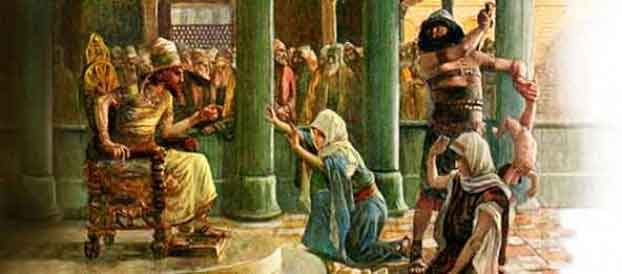
“Cut the baby in two and give half to each woman!” Do you remember the story? Two prostitutes presented their cases to King Solomon. They lived together and both had babies. But a baby died in the night. One woman claimed she awoke to find the dead baby next to her but it wasn’t hers. She said the other woman had taken her living baby and replaced it with the dead one. But the other woman said this was a lie, that the living baby was hers. After listening to both King Solomon asked for a sword and he was brought one. He told his men to cut the living baby in two and to give half to each woman. The false mother was comfortable with this, but the real mother said, “Please my lord, give her the living baby! Don’t kill him!” So, the real mother was revealed and King Solomon gave the baby to her alive (1 Kings 3: 16-28).
Here is a 2013 parallel: Two Kenyan presidential candidates appeared before God. One claimed that when the election took place the other had cheated and so he, who lost, was the true president; the country was his. The one who had won said that this was untrue, that he had won fairly and was the true president; Kenya was his. Then God called for a map of Kenya and his servants brought one. Then he told them to tear it in two and to give half to each candidate, and they did. Then God said, “Now you be president of this half and you be president of that half.” One candidate said “Fine, at least I am a president!” But the other candidate shouted “No! Don’t split Kenya! It will be the end of the nation! Give Kenya to my opponent!” Then God smiled and gave this ruling, “The one who was willing to sacrifice his position for the nation is the true president, give Kenya to him.”
My point can apply to all nations and all presidents. Many things come together to make a good president, but the most important thing is his heart. He must be someone who is willing to lay down his personal ambition for the life and health of the country. This is a true president.
Now imagine if both women had been allowed to bring their friends with them as they stood before the King. No doubt their friends would have support them saying, “Oh she may be a prostitute, but she would never lie, if she says the baby is hers, it is!” Friends are biased; they have a personal investment in the relationship, and so they have a tendency give support even when they have no evidence. Many of us who support a presidential candidate in Kenya have been a bit like that. We are confident our candidate is the real winner. One group is confident that the count was corrupt, and the other is confident that it wasn’t. But none of us really know; we were not there doing the counting, just like there was no one else in the room when the baby died.
So we have a dilemma, we are supporters of one of the woman but we may be supporting the wrong one, and who of us will admit it? Who of us have the character to say, “My friend is not the mother. Or I was wrong; my candidate should not be president.” If we want genuine leaders, we must first be genuine supporters! A supporter today could be a leader tomorrow!
Now if you are a follower of Jesus I have good news for you. You may be a friend of the one woman, but you are an even bigger friend of the king. In fact you are one of his children. And as a child of the king you make sure you represent the king before you support a friend. You see, Christians are children of God, and they are to follow God before they follow any presidential candidate. Our identity is not in a national candidate for Kenya, it is in the President of the universe! When people get into heated political debates we must stand beyond the turmoil and look at it with God’s eyes.
Now when King Solomon gave this ruling over the women people were amazed; they saw that God had given him ‘wisdom to administer justice’ (28). Does Kenya need wisdom to administer justice? Do we need the hearts of our candidates revealed? I think so.
The Bible says there are two kinds of wisdom; the world’s wisdom and heaven’s wisdom. James 3:13-18 says the world’s wisdom is driven by ‘bitter envy and selfish ambition’ which causes ‘disorder and evil practice.’ But heaven’s wisdom is ‘pure; then peace-loving, considerate, submissive, full of mercy and good fruit, impartial and sincere.’ Please take note; it’s impartial! This means we do not side with our tribe or our friends, we side with God! Partiality in voting indicates that a nation is not truly Christian. Our words may be Christian but are actions are not. Can we all say ouch! And if siding with God reveals that our candidate is corrupt, we must accept it and say it. If God’s children twist the truth there is no salt and light left for the nation!
Now note that James also says heaven’s wisdom is peace-loving. God’s kingdom isn’t about justice or peace; it’s about justice and peace! We don’t have to choose between them; Jesus is king of both. So let’s not shout for one or the other, let’s insist on both. Kenya needs both!
Have you ever seen a big storm at sea? Waves can look like moving mountains, boats are tossed like toys, ships are swamped, sailors go overboard; it can be frightening. But go just a few feet below the water and all is calm. Fish swim about unbothered by the turmoil above. Where there is depth there is peace. That’s the way it is with children of God. When there is turmoil they go deep, they sink their hearts into God’s presence, and they are unmoved. If you represent the King of the universe, don’t be knocked about by the wind and waves of the Kenyan elections; don’t be caught up in the rumours and name calling. Be impartial and peace-loving; your unbelieving friends need it.
John 1:1-18
No baby, no manger, no shepherds, no wise men, no guiding star, not even a virgin! This is John’s nativity – he omits them all. For John Christmas is simply: the Word became flesh. Not as cute as the baby, not the stuff that inspires awesome snow scenes, but it has the same conclusion: Jesus is Emmanuel – God with us. Or put John’s way – the Word become flesh.
John doesn’t tell us why he omits the manger and the virgin birth, but we can make some calculated guesses. Perhaps, unlike Matthew and Luke, he felt he should only testify to what he saw. Or perhaps he was trying to respond to specific questions people had at the time of writing; like how can Jesus be both God and man? Or how can God have a Son? Whatever his motives were we are grateful for the rich insights that accompany his explanation of the origins of Christ.
In his opening chapter John refers to Jesus as the Word, the Light and the Son. Today we will discuss each one briefly.
Jesus – the Word
John says “The Word was with God and the Word was God” (1). This is an interesting description. It spoke to Jews and Greeks. Jews saw God’s Word as his revelation coming through the prophets. Greeks saw God’s Word as the divine idea or command that formed the universe. John uses both the Jewish and Greek understandings to explain how Jesus could be both God and man. He says the Word (God’s revelation and his creative ideas) were with God and were in fact God too. God’s Word – his revelation and his thinking – cannot be separated from him; they are a part of him. And Jesus is the Word who became flesh – or human (14).
It’s interesting that the Koran also describes Jesus as God’s Word. In fact it tells us that he is God’s Word bestowed on Mary (Surah 4:171). But the same verse goes on to deny that Jesus is divine. Here we need to ask a question; can God and His Word (his revelation and thinking) be separated? If they cannot; then God’s Word conceived in Mary must be God too. This is certainly what John is claiming. But let’s move on and look at the second description John uses in his nativity.
Jesus – the Light
Speaking of the coming of Jesus John says “The true light that gives light to everyone was coming into the world” (9). Light enables us to see; Jesus is the light that enables us to see God.
Alpha Centauri is the closest star to our earth (if we don’t count the sun). We would not know Alpha Centauri was there if it weren’t for its light. Its light travels 4.37 light years to reach us. Jesus is the light of God; he has travelled to us so we could see and understand who God is. Prophets can share the light of God, but they themselves are not the light. John is saying that Jesus is different to a mere prophet in that he is the light itself (John 8:12). Again we must ask; can we separate a star from its light? Perhaps we can with verbal descriptions, but ultimately the light of a star is an emanation of the star. And Jesus is an emanation of God – he is God from God.
Now there is a reason why John is taking us through these descriptions – understanding the Word and Light of God helps us to understand how Jesus is the Son of God.
Jesus – the Son
John says “No one has ever seen God, but God the one and only Son has made him known” (TNIV). People often don’t understand how Jesus can be the Son of God because they are thinking of a son in human terms; they think that a Son of God can only come from a Father and Mother God. This is not what is meant when the Bible says Jesus is the Son of God. The Bibles concept is simply this; Jesus is the Son of God because his being comes directly from God’s being. Spiritually he is of the same substance as God. The word son simply describes the fact that he comes from something. The something he comes from is God. Just as God’s Word and Light streams from God and is the same as God, so God’s Son streams from God and is the same as God. The Son of God existed before Mary gave birth; he is an eternal Son an eternal emanation. You might point out that sons don’t stream from fathers eternally. That’s correct, that’s one of the reasons why the concept of God’s Son is different to that of a human son.
The Bible tells us that there are many prophets but one Messiah. Again the Koran agrees with this, but it does not explain the difference between a prophet and a Messiah. The Bible does. A prophet is one of God’s many servants, but the Messiah is his final and ultimate representative. The Messiah is King of kings, Priest of priests, and Prophet of prophets. He is not just one who speaks the truth, but is the truth itself. He is not just one who points the way, but is the way itself. A prophet can speak from God to the people, but he cannot be God to the people; the Son of God can. After many prophets had come and gone John said, “No one has ever seen God, but God the one and only Son has made him known.” Only the Son of God can be a complete representative of God. This is the reason that God’s Word became flesh and was bestowed on Mary; that God would be with us, and made known to us. Happy Messiah-mas!
Matthew 22:15-46
“Give to Caesar what is Caesar’s, and to God what is God’s.” With such words Jesus silenced the religious leaders. People were amazed. They asked “How did this man get such learning without having been taught?” Hearing them Jesus answered, “My teaching is not my own. It comes from the one who sent me” (John 7:16). When Jesus told the Jews to give to Caesar what is Caesar’s, some Pharisees and Herodians had come to catch him in his words. They wanted to show him up as a false teacher. The Pharisees considered themselves to be guardians of the law – those who upheld what it was to be Jewish. The Herodians were the pro-Roman Jewish aristocracy who demanded loyalty to Herod and Caesar.
The Pharisees said to Jesus “We know that you are a man of integrity and that you teach the way of God in accordance with the truth. You aren’t swayed by others, because you pay no attention to who they are.” Their flattery was designed to remind Jesus that unlike the Herodians, he wasn’t a man who treated Caesar differently to ordinary men. And from this platform they fired their trap question – “Should we pay taxes to Caesar or not?”
This question placed Jesus in a very difficult position. If he said “No, we shouldn’t pay tax,” he could be accused of trying to raise a rebellion against Rome over tax as another Galilean had done just 25 years before. If he said “Yes, we should pay tax,” he would appear unsympathetic toward his own people who resented paying tax to their conquerors.
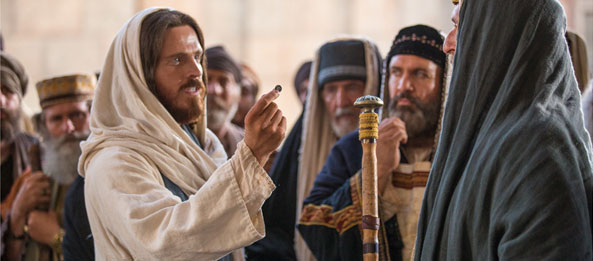
But the Father gave Jesus wisdom and boldness for the moment. And he said “You hypocrites, why are you trying to trap me? Show me the coin used for paying the tax.” And one of the Jews fumbled around in their purse and produced a denarius. Holding it up Jesus said “Whose image is this. And who’s inscription?” “Caesar’s” everyone responded.
Now we have to understand that the Jews did not carry this coin just to pay tax, it was a coin used for general buying and selling. In fact the Jews would dodge this tax where possible, so if they had the coin it was for general commerce. Roman money was not the only currency available, but it was the strongest – like Dollars today. Jews used it because it was simply better money. And since they were benefitting from Caesar’s system, Jesus said “Give to Caesar what is Caesar’s.” He was saying, ‘This has Caesar’s image, it belongs to him – so pay him what is due.’
But then Jesus said something far more important: “And give to God what is God’s.” Oh, and what is God’s? Well, where do we find his image? Genesis 1:27 says mankind is made in God’s image, and as God’s chosen people the Jews considered themselves to be better representatives of God than anyone else. But here the Jewish leaders were being deceptive and trying to trap a man who was speaking the truth. So Jesus was saying ‘If you bear God’s image then act as God’s image. He has given you life, so give him was is due.’
Here, Jesus exposed the Jews hypocrisy on two levels – first, they wanted to make him look unsympathetic towards the Jews, but they were the ones carrying Caesar’s coins. And secondly, they were out to make Jesus look like a bad representative of God when in fact they were the ones who were misrepresenting him.
Having failed in their attempt to trap Jesus the Pharisees and Herodians then wandered off. But that same day the Sadducees tried to get Jesus with another question. We won’t go into the details here, but because the Sadducees did not believe in life after death they raised a question that was designed to mock the idea. But Jesus said “Have you not read what God said to you, ‘I am the God of Abraham, the God of Isaac, and the God of Jacob’? He is not the God of the dead but of the living.” Jesus was saying that God who is living does not identify himself with the dead, so Abraham must be alive and enjoying the ever-present God. This time it was the Sadducees were amazed at the words of Jesus.
When the Pharisees heard that Jesus had silenced the Sadducees they returned with an expert – one of their best. And the expert asked Jesus, “Which is the greatest commandment in the Law?”
Wasthis another trick question? Yes, it was. If Jesus claimed that one command was more important it would mean that the others were less important, and Jesus could be criticized for belittling large portions of God’s word. But again the Father was ahead of their tricks.
Jesus said the greatest command is to “Love the Lord your God with all your heart and with all your soul and with all your mind” and the second is like it, to “Love your neighbour as yourself.” He said “All the Law and the Prophets hang on these two commandments.”
This is a brilliant reply because Jesus chose two commands that covered the whole law. Love is the basis of God’s entire law. So Jesus did not slip into the trap of making any part of the law less important. This time he had silenced and expert in the law.
Finally it was Jesus’ turn to ask a question. He asked the Pharisees, “What do you think about the Messiah? Whose son is he?” They said “The son of David.” All Jews knew the scriptures said that! But Jesus said “How is it then that David, speaking by the Spirit, calls him ‘Lord’? For he says ‘The Lord said to my Lord …’ (Psalm 110:1). If David calls him ‘Lord,’ how can he be his son?”
Was Jesus now trying to trap them? No. He was provoking their thinking. He wanted them to see that the Messiah was more than David’s son; he was also God’s Son. Again the Pharisees were silent, and the scripture says ‘From that day on no one dared to ask him any more questions.’
The unschooled carpenter’s son from lowly Nazareth had silenced the ‘professors of religion’? He spoke with the wisdom he heard from heaven. And you and I who have the Spirit of God can also speak as we hear from heaven.
Years later the apostle Paul was speaking about this when he said “Brothers and sisters, think of what you were when you were called. Not many of you were wise by human standards; not many were influential; not many were of noble birth. But God chose the foolish things of the world to shame the wise; God chose the weak things of the world to shame the strong.” (1 Cor 1:26-27). “This is what we speak, not in words taught us by human wisdom but in words taught by the Spirit, explaining spiritual realities with Spirit-taught words” (1 Cor 2:13). Jesus said “When you are brought before synagogues, rulers and authorities, do not worry about how you will defend yourselves or what you will say, for the Holy Spirit will teach you at that time what you should say” (Luke 12:11).
I think it’s important to note that when Jesus silenced the Pharisees he used a lot of scripture. Being led by the Spirit does not mean we don’t need to know our Bibles. In fact the Spirit can use us more powerfully when the scriptures are in us. We should think of our minds as being like tool boxes that can be empty or full. The more we read the Bible the more scripture we will have in our memory. Then when we find ourselves in a tight spot as Jesus did, the Spirit can remind us of scriptures we have read. It’s like he goes into our toolbox and says ‘Hey, use this,’ or ‘Say that!’
Like Jesus, you don’t need a university degree to answer critics, a good knowledge of scripture and an ear for the Spirit will take you a long way.
Genesis 15: 1-6, 16: 1-5,12, 17: 17-21, 21: 1-7
If God promised you a child would you expect it to happen through your maid? No! You would expect your wife to conceive. Abraham’s decision to have a child through Hagar the maid was an act of unbelief. Even in a culture where barren women occasionally resorted to having children through servants, you would not expect a promise of God to be fulfilled that way. And Abraham knew this; that is why he initially waited for it to happen through Sarah. But he and his wife started to doubt when it was taking time and they soon colluded to have a child through their maid, and Ishmael was born. Ishmael was a work of Abraham not God, and he became a source of trouble even while he was still in his mother’s womb; fruitful Hagar despised barren Sarah. And later he and his descendants were a continual problem for Isaac and his descendants. The angel of the Lord summed Ishmael up saying he would be a wild donkey of a man, constantly hostile to all around him (16.12).
Through Abraham wavered in his belief God stuck to his promise to give Abraham a legitimate son, and Sarah gave birth to Isaac; and how different he was. Isaac means ‘he laughs’ and he brought laughter to his parents because they both knew his birth was humanly impossible, he really was a work of the Spirit. In fact when the apostle Paul compares Abraham’s two sons in Galatians 4.21-31 he calls Isaac the son of the Spirit and freedom, and Ishmael the son of the Law and slavery. And he goes on to say “We are not children of the slave woman, but of the free woman.” He opens the story up to symbolic interpretation, and we will too.
Abraham isn’t the only one who gets impatient waiting for the work of the Spirit, we all do, and often we create an Ishmael when God wants to give us Isaac. I would like to highlight two areas where believers and whole churches do this.
Worship
Have you ever been to a church service where the worship was a work of man? Can you remember the feeling? The leader upfront tries to talk you into doing things like clapping or dancing, and you attempt them but it’s awkward because what they’re asking isn’t inside you. And you look at our friends and they are also trying but their smiles are forced and their feet are stiff. This is Ishmael, an attempt to act like the Spirit is moving when he isn’t. Ishmael is a fleshly counterfeit of Isaac.
But perhaps you have also been to a service where the worship was driven by the Spirit of God; there was an ease and a grace from within and you could not believe the things God got you to do. There you were singing a verse as usual and suddenly it had new meaning, and as you sang it over and over you felt a presence on you that made you want to smile, and when you looked up you saw that your friends were smiling too, and soon their smiles turned into passionate weeping as they experience the touch of God. This is Isaac, the work of the Spirit. It is different to the work of man, but you have to wait for it. Isaac comes when God chooses.
Many believers assume there are only two options; either we are alive Christians who clap, dance and shout every week, or we are dead Christians who never do any of these things. But what if we clap, dance and shout when God is initiating it and don’t when he isn’t? What if we follow Jesus’ example and only do what the Father is doing? Isn’t ‘alive’ worship led by the Spirit? If we clap, dance and shout every time we are in church, it’s the law; just as never doing it is the law. And Ishmael is about the Law and doing things in our strength. But Isaac is a work of the Spirit, and the Spirit could do something totally new every Sunday. And if continue to clap, dance and shout when God is initiating something else, Ishmael disrupts Isaac, man’s efforts hinder the Spirit’s activity.
So how do we move with God’s Spirit in worship? I would suggest that it’s a bit like a surfer catching a wave. Surfers don’t go into the sea to paddle about in their own strength, they go to catch a wave, and when it comes they ride a power that’s not their own! But surfing is an art, you have to learn to recognise a good wave, and a surfer will watch the rising swells and judge with some experience when it’s time to stand and go. Likewise worshippers and especially worship leaders will look for signs that a wave of the Spirit is rising. They are constantly aware of what’s going on within, what’s happening in the atmosphere around them, and what others are experiencing. And the wave they catch may involve clapping and dancing, but it could also be a deep and intimate wave, or a wave of surrender and repentance. If we are moving with the Spirit worship will be different every week.
When we are choosing worship leaders and musicians we must be especially careful. You do not want Ishmael leading your worship! You want a work of the Spirit, not a work of man. Remember music is not worship. Anyone can hire a musician and have good music. But worship is something that involves the leading of the Spirit and you need someone who is a true worshipper and knows how to follow God to do that. When music replaces worship, Ishmael replaced Isaac. Musicians are for hire, worship leaders are not. A genuine worship leader will join your church months before you know what he can do just because God called him, and he won’t force his way in, he will wait for God to do it.
In Kenya many churches tip their musicians and this has resulted in musicians roaming around from church to church to make as much money as they can. Tipping (or ‘blessing’) musicians has created wrong motives for leading worship, and in many places concert style entertainment has replaced the work of the Spirit; Ishmael has replaced Isaac. So don’t run out and hire someone, wait for God to send the right person.
Ministry
I will just touch on this briefly because ministry and worship have similar dynamics. When I say ‘ministry’ I mean the activity where we lay hands on people for God to do a work of power.
Have you ever experienced ministry that was obviously the work of man? I have; pastors have tried to push me over, ministers have told me I was healed when I wasn’t. But I do not deny that God does these things. The Spirit’s presence has caused people to fall in our church when no one was praying for them, they were just worshipping; and have from time to time people have experience healing. We must be careful. When Abraham created Ishmael he was trying to do God’s work for him, and when we fabricate God’s power by pushing people or making false claims about healing we are doing the same thing. This is Ishmael, the work of man. But how wonderful it is when Isaac comes. There we see the real hand of God, and because we know it’s not us, we laugh like Abraham. But we have to be willing to wait; Isaac comes when God wants him too.
If you are a real believer, insist on what is real; it’s time for the church to get real.
People love prophecy; even those who are not religious like to discuss predictions of the future. But it gets much more interesting when the predictions come true. At times it may be coincidence, but at other times the predictions can be weirdly accurate. But when we get to Jesus and the way in which he fulfilled Old Testament prophecy we get to a level of prediction that can only be described as ridiculously accurate.
In this post I focus on the prophecies of the Messiah (the Christ) found in the book of Isaiah. But to do this justice we need to put ourselves in the shoes of someone reading the book before Jesus walked the earth. We must read as one who had no knowledge of him. Doing this helps us to understand why there was such a big expectation of a Messiah in the first place.
In case you have never read through Isaiah, let me just say this; at first glance Isaiah is just a book containing many prophetic warnings given to various kings and nations, but between these warnings emerges prophecy of a mystery person. This person is someone Isaiah considered to be Israel’s only hope in a rather dire situation. The mystery person is first described as a child that God gives to the Jewish people, then as a branch (or shoot) that grows out of a tree stump (the conquered Jewish nation), and finally as a servant who lays down his life for the Jews and the entire world. Let’s look at each of these descriptions separately.
The Child
In Isaiah 7:10-17 the prophet is speaking to King Ahaz of Judah. The king has just decided to reject being part of a coalition with Israel against Assyria and God is confirming that this was the right thing to do as Israel was about to be destroyed. The prophet tells Ahaz that God will give him a sign. A virgin (or young girl) will conceive and give birth to a son. The son will be called Immanuel which means ‘God with us.’ But later in 8:3-4 God gives the child an additional name; Maher-Shalal-Hashbaz which means ‘Quick Picking – Easy Prey.’ And God says that before the child can eat solids or say ‘mother’ or ‘father’ the kingdom of Israel will be taken by the Assyrians. At this point it seems that the prophecy is all about an event in the immediate future – God is showing Ahaz when the kingdom of Israel will be conquered. And the name Immanuel would not have been seen as odd because Jews often had names with divine meanings. But then Isaiah adds a second part to the prophecy in Chapter 9:1-7. And here the child suddenly gains a whole string of divine names and also an eternal nature, which is rather odd. The child is called ‘Mighty God,’ ‘Wonderful (or Supernatural) Counsellor,’ ‘Prince of Peace,’ ‘Everlasting Father.’ Plus he is given the divine task of reigning on David’s throne forever. And Jews before Jesus’ time must have been wondering how a ruler could be endowed with such divine ability.
Of course with Christ having come we have the advantage of hind-site; we know there were two fulfilments to this prophecy. An immediate one where the child Maher-Shalal-Hashbaz acts as a sign to Ahaz of when Israel would be conquered, but also a distant one where Jesus as Son of God, Supernatural Counsellor, Prince of Peace, one with the Father rules as King of kings forever.
As indicated above the Hebrew word for ‘virgin’ (almah) in this prophecy can also be translated ‘girl.’ It was usually used to refer to a young girl who was still to get married and had never slept with a man, but could also be used for a girl who had never given birth. In Ahaz’ time the girl was Isaiah’s young wife (8:3) who had never given birth and conceived in a natural way at the time the Lord spoke of. But in the distant fulfilment we see that the virgin is Mary the mother of Jesus who conceived supernaturally and gave birth to the eternal King. The double meaning of ‘almah’ allowed for both immediate and distant fulfilments. It’s interesting that the Septuagint (Greek Old Testament from before Jesus’ time) uses the word ‘virgin’ and not ‘girl,’ and this is the version that Matthew used to refer to Mary in his gospel (Mt 1:23).
The Branch
The Branch is best described as a shoot. This shoot emerges from a tree stump. The Jewish nation was a tree cut down by Assyria, but out of the remaining stump comes a shoot – a person who leads a new nation of people that are obedient to God. Again there is an immediate fulfilment when the Jews return to their land after being in captivity, but there is a distant and greater fulfilment when Christ emerges as a shoot out of a spiritually dead Israel and leads a remnant of the Jews into a kingdom that is eternal and not of this world (John 18:36).
Like the child; the Branch is said to have the Spirit upon him, the Branch is righteous and the Branch is supernaturally guided. It is quite clear that the child and the Branch are the same person, and that the child and the Branch are God’s solution for a Jewish nation that is about to be destroyed. From this time on whenever the Jews were oppressed they would find hope in Isaiah’s prophecies of a saving Messiah. And this was especially true at the time of Christ when Israel was being dominated by Rome. The interest is obvious from the conversations of the men who first followed Jesus. John 1:45-46 says ‘Philip found Nathanael and told him, “We have found the one Moses wrote about in the Law, and about whom the prophets also wrote – Jesus of Nazareth, the son of Joseph.” “Nazareth! Can anything good come from there?” Nathanael asked. “Come and see,” said Philip.’
The Servant
Like the child and the Branch the Servant is described as a shoot, someone with God’s Spirit upon him, and as someone who acts justly. The Servant appears in four songs (or poems) found in Isaiah 42, 49, 50 and 52-53. And like the Branch the Servant offers the Jews hope when the kings Israel and Judah had become disobedient. Here is the fourth and final song of the suffering Servant found in Isaiah 52:13-53:12. It is worth reading all the way through:
‘See, my servant will act wisely; he will be raised and lifted up and highly exalted. Just as there were many who were appalled at him – his appearance was so disfigured beyond that of any man and his form marred beyond human likeness – so will he sprinkle many nations, and kings will shut their mouths because of him. For what they were not told, they will see, and what they have not heard, they will understand.
Who has believed our message and to whom has the arm of the LORD been revealed? He grew up before him like a tender shoot, and like a root out of dry ground. He had no beauty or majesty to attract us to him, nothing in his appearance that we should desire him. He was despised and rejected by men, a man of sorrows, and familiar with suffering. Like one from whom men hide their faces he was despised, and we esteemed him not.
Surely he took up our infirmities and carried our sorrows, yet we considered him stricken by God, smitten by him, and afflicted. But he was pierced for our transgressions, he was crushed for our iniquities; the punishment that brought us peace was upon him, and by his wounds we are healed. We all, like sheep, have gone astray, each of us has turned to his own way; and the LORD has laid on him the iniquity of us all.
He was oppressed and afflicted, yet he did not open his mouth; he was led like a lamb to the slaughter, and as a sheep before her shearers is silent, so he did not open his mouth. By oppression and judgment he was taken away. And who can speak of his descendants? For he was cut off from the land of the living; for the transgression of my people he was stricken. He was assigned a grave with the wicked, and with the rich in his death, though he had done no violence, nor was any deceit in his mouth.
Yet it was the LORD’s will to crush him and cause him to suffer, and though the LORD makes his life a guilt offering, he will see his offspring and prolong his days, and the will of the LORD will prosper in his hand. After the suffering of his soul, he will see the light [of life] and be satisfied; by his knowledge my righteous servant will justify many, and he will bear their iniquities. Therefore I will give him a portion among the great, and he will divide the spoils with the strong, because he poured out his life unto death, and was numbered with the transgressors. For he bore the sin of many, and made intercession for the transgressors.’
The text basically says that the Servant suffers to atonement for other peoples sins. Isaiah says ‘He was pierced for our transgressions … the Lord has laid on him the iniquity of us all … the Lord makes his life a guilt offering … my righteous servant will justify many.’ It is quite profound that Isaiah would prophecy this because Jews did not use humans to atone for sins, they used animals. But in hind-site we can see that all their animal sacrifices pointed to a final sacrifice that would be made by the Messiah (the Christ). Soon after Christ was crucified and resurrected all Jewish animal sacrifices ceased. Isaiah 53 is quite obviously a prophetic picture of Christ on the cross. When Christ was crucified he took the sins of the world upon him so the nations could be healed.
But let’s now look at what we get when we bring the prophecies of the Child, the Branch and the Servant together. Below I have listed a few important things:
He will be a descendant of David, he will be the son of a virgin, he will be called ‘God with us’ and ‘Mighty God,’ he will have the Spirit of the Lord upon him, he will open the eyes of the blind, he will set captives free, he will release those in darkness, he will care for needy, he will be merciful to broken, he will bring honour to Galilee, he will be a covenant between God and the people, he will be our atonement for sins, he will bring wells of salvation, he will be a light to the Gentiles, he will be a righteous judge, and he will reign forever.
These prophecies paint such a convincing picture of Christ that some people have wondered if Christians tampered with the words of Isaiah. But anyone can check manuscripts like the Dead Sea Scrolls or the Septuagint mentioned above that are much older than Christ and they will see that the words have never changed. What we are dealing with here is genuine prophecy with genuine fulfilment.
It’s worth stating that Jesus knew he was the mystery man prophesied by Isaiah. In fact when Jesus wanted to state what his mission was, he stood up in a synagogue in Galilee, opened the scroll of Isaiah at chapter 61:1 and read, ‘The Spirit of the Lord is on me, because he has anointed me to preach good news to the poor. He has sent me to proclaim freedom for the prisoners and recovery of sight for the blind, to release the oppressed, to proclaim the year of the Lord’s favour.’ He then rolled the scroll up and said to everyone that was watching, “Today this scripture is fulfilled in your hearing” (Luke 4:17-21). Jesus believed he was the ‘anointed one’ (Messiah) of Isaiah’s prophecies, he believed he was the Child, the Branch and the Suffering servant who was to come.
Why is Messianic prophecy important?
Messianic prophecy given in the Old Testament and fulfilled in the New Testament is important for two reasons. First, it is provides powerful evidence for those who wish to prove that the Bible is inspired by God. It is in fact the best evidence; only God knows the future. Second, it confirms that Jesus is unique. He is the one who takes the sins of the world upon himself, judges all nations and rules forever. And this last point has an attachment; if Christ is unique then so is Christianity.
You’ve seen the prophecies; you know their fulfilments. If you believe Jesus is the prophesied Messiah, commit to it and preach it with all you have.